


Tomodachi Life: Living the Dream Review

A hilarious, heartfelt life sim for Nintendo Switch 2 where Miis create chaos, comedy, and charm, my full review.

More than a decade after Tomodachi Life became one of the Nintendo 3DS’s most unique cult classics, Tomodachi Life: Living the Dream brings Nintendo’s surreal social simulator back with plenty of personality. After dozens of hours with the game, I can confirm it is still charming, ridiculous, and often laugh-out-loud funny.
At its best, Tomodachi Life: Living the Dream turns everyday life into a miniature Nintendo reality show. Tiny dramas, oddball friendships, strange requests, and unexpected romances keep the island buzzing. It can feel repetitive in longer sessions, and its restrictive sharing options are disappointing, but the cozy charm, strange humour, and grin-worthy surprises make this a wonderfully weird return.

Tomodachi Life: Living the Dream Review Details
Platform(s): Nintendo Switch, compatible with Nintendo Switch 2
Reviewed on: Nintendo Switch 2
Developer: Nintendo EPD
Publisher: Nintendo
Genre: Life Simulation / Social Simulation
Available game modes: Single-player
ESRB Rating: Everyone
Tomodachi Life: Your Island Sitcom
Tomodachi Life: Living the Dream does not offer a traditional story. Instead, it gives you a more social-sandbox experience. You have your own island, a cast of Mii characters, and a steady stream of unpredictable social chaos that is quite entertaining. When it comes to the cast of characters on the island, you get out of the experience what you put into it. You can create Miis based on friends, family, celebrities, fictional characters, or completely absurd ideas, then watch as their lives overlap.
Mii’s Social Quirks Make the Experience Special
One Mii might fall in love. Another might argue over something trivial. Someone else might need a new outfit, a strange meal, or emotional advice. The comedy comes from how ordinary and bizarre everything feels at once. The game has the energy of a neighbourhood gossip simulator crossed with a Nintendo fever dream.
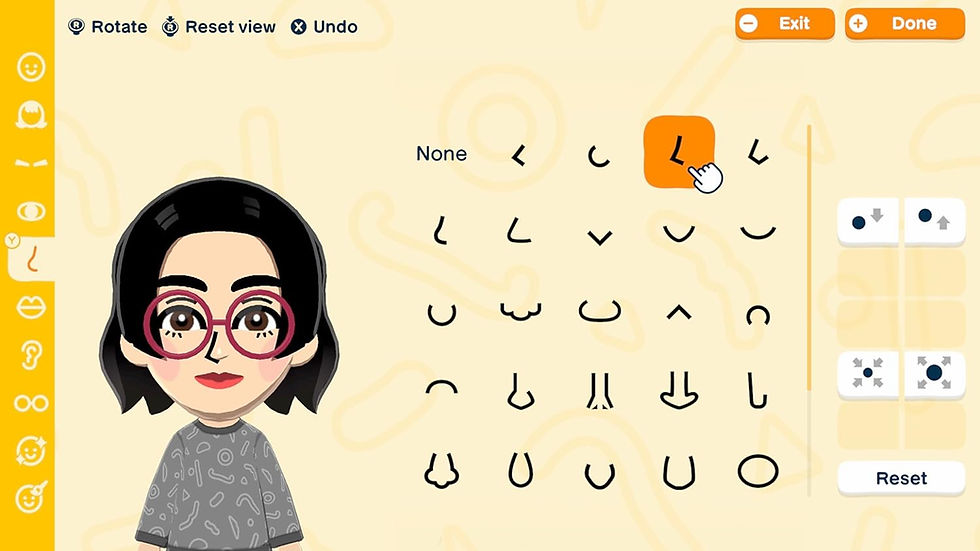
A Stronger Mii Creator Suite Makes The Experience Better
The upgraded Mii creator is one of the game’s biggest wins. The tools are more flexible, expressive, and playful than before. Face Paint adds a huge creative boost, making it easier to create recognizable characters or strange custom designs. Little Quirks also help give Miis more personality. These small behavioural details, such as how a Mii eats, walks, speaks, or acts, make characters feel more specific. They do not always dramatically change interactions, but they do make each Mii feel more handcrafted.
Palette House Adds More Creativity
Palette House is another excellent addition because it expands creation beyond Miis. You can design food, clothing, furniture, toys, and other items that make your island feel more personal. Creating a bizarre food item and watching a Mii react to it is instantly funny, while designing custom objects for specific characters adds another layer of storytelling and personalization to the experience, which is a big plus.
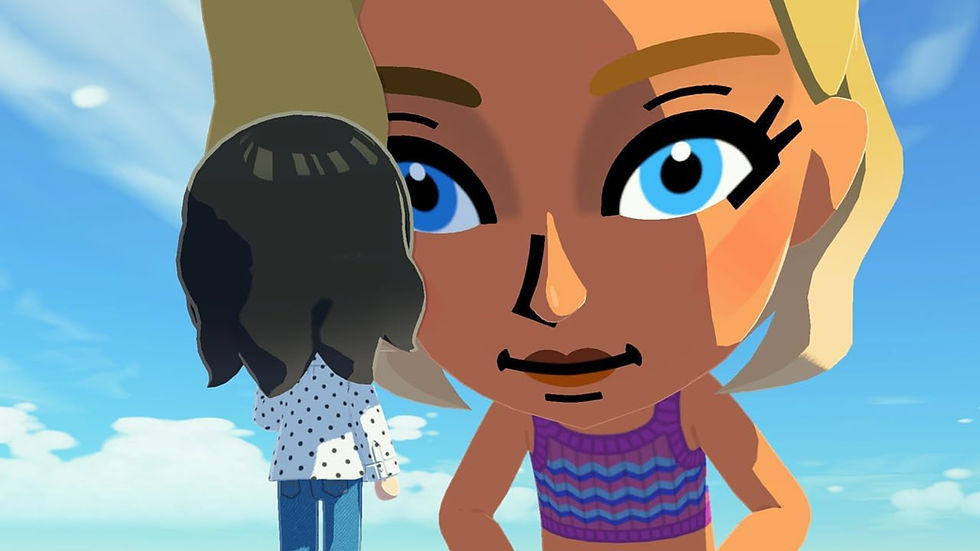
Social Chaos Meets Cozy Routine
The core gameplay loop is simple: check in on your Miis, feed them, give them gifts, decorate their spaces, solve small problems, and watch new interactions unfold. That simplicity is both the game’s biggest strength and its main limitation.
The rhythm is relaxing and easy to enjoy. There is no pressure to min-max your island or chase constant objectives. Happiness levels, new items, buildings, and social events give the game enough structure to keep you moving forward without turning it into work.

Text-to-Speech Hilarity
The text-to-speech system remains one of the funniest parts of the experience. The slightly robotic delivery gives even basic dialogue a wonderfully awkward charm. A dramatic confession, a petty argument, or a random request becomes funnier because of how Miis deliver it.
However, repetition eventually creeps in. After several hours, a pattern becomes all too familiar. You feed Miis, handle requests, resolve disputes, unlock rewards, and wait for the next surprise. The game still produces funny moments, but the pacing can flatten when too many interactions follow an all-too-familiar pattern that can become monotonous.
Building a Dream Island
Island building gives Tomodachi Life: Living the Dream a nice sense of progression. As your island grows, you unlock more buildings, shops, features, and customization options. Watching your Miis wander around the environment adds a lot to the fantasy. You are not just managing characters, you are shaping the world they live in, adding your own unique handcrafted items if you want to go really deep into the creative tools.

That said, the island-building tools are more charming than complex. If you are expecting a full design suite on the level of Animal Crossing: New Horizons, you may find it lighter than expected. That said, the focus here is on the social interactions, so this design decision is understandable.
Social Sharing Limitations
Tomodachi Life: Living the Dream is incredibly charming, but its limited social sharing options feel like a missed opportunity. For a game built around custom Miis, funny interactions, and unpredictable moments, I constantly wanted easier ways to share my island, creations, and favourite scenes with others.
I understand why Nintendo has placed limits on sharing, especially with such open-ended creative tools. Still, the lack of Mii sharing from the 3DS version, with easy scan-and-share QR codes, and the Switch's blocking of capture options make it prohibitively difficult to share the game’s funniest moments.
The game gives you so much freedom to create, but not enough ways to show those creations off.
It doesn’t ruin the experience, but it does make Living the Dream feel more closed off than it should, especially when, at the game’s core, it’s all about social interactions.

Final Thoughts on Tomodachi Life: Living the Dream
Tomodachi Life: Living the Dream is a wonderfully strange return for one of Nintendo’s most unique life-sim franchises. It is funny and packed with the kind of unpredictable moments that make you want to tell someone what just happened.
The improved Mii creator, Palette House, island building, and stronger presentation all help make this feel like a meaningful follow-up. It is at its best when your island feels like a tiny sitcom filled with people, characters, and weirdos you personally created.
Even with repetition and restrictive sharing, I had a great time with it. For players who enjoy cozy games, social simulation, and creating their own bizarre stories, this is absolutely worth experiencing.
Tomodachi Life: Living the Dream Pros
+Fun and expressive Mii creation tools
+Unpredictable social interactions are genuinely funny
+Palette House adds a strong creative layer
Tomodachi Life: Living the Dream Cons
-Gameplay loop can become repetitive
-Sharing Miis and custom creations is too restrictive
-Some players may want more direct control
Overall Assessment of Tomodachi Life: Living the Dream
Gameplay: 7.5/10
Graphics: 7/10
Sound: 7/10
Lasting Appeal: 8.5/10
Tomodachi Life: Living the Dream Overall Rating: 30/40 — 75%
Nintendo provided a copy of Tomodachi Life: Living the Dream to conduct this review.
About the Author - Matthew "Dapper Tux" Rondina
Matthew has been involved in all things gaming since the 8-bit era. He is a video game and tech industry veteran who has been passionate about technology and gaming for over 20 years. In addition to being the Managing Editor of dappertux.com, he has bylines with Best Buy, Cineplex Entertainment, Mobile Syrup and Walmart. Follow Matthew’s gaming + tech adventures on multiple social platforms with the handle @dapper_tux via X, Instagram, Threads, TikTok, and join in on the fun!
dappertux.com uses affiliate links to provide a way for this website to earn advertising income. The blog may earn a referral commission on purchases made via these links.


Comments